Products sell out at odd hours and sometimes you learn about it only after customers start asking. Missing a restock means your competitors could grab that sale. Getting a handle on inventory makes a real difference for both your sales and your sanity.
This tutorial explains how out-of-stock email notifications work, why they matter, and how you can set up an alert for your Shopify store.
TL;DR: Skip the step-by-step tutorial. Use this template to get email alerts when products go out of stock with just a few clicks.
Step-by-step: How to send out-of-stock email alerts
Time needed: 5 minutes.
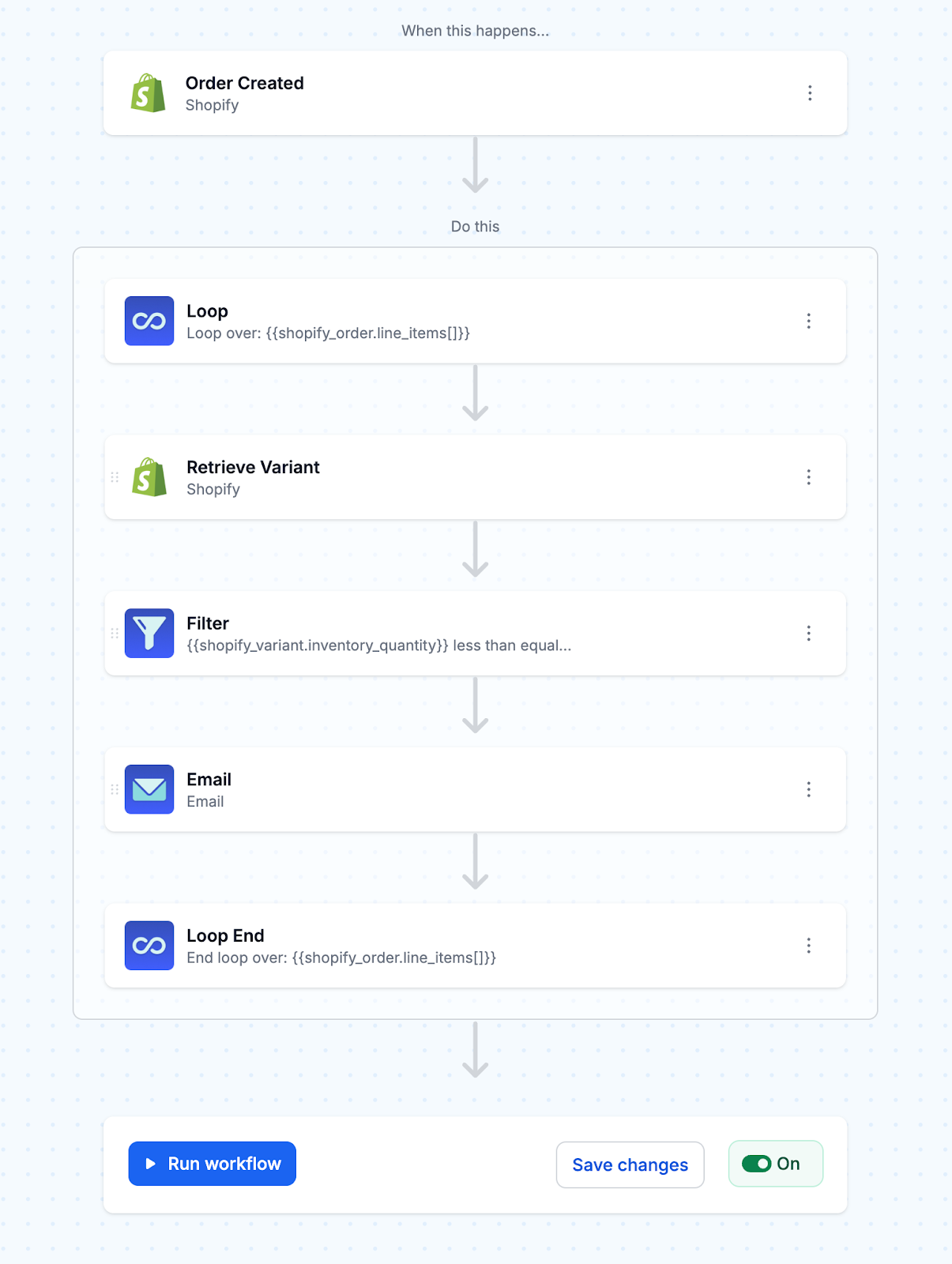
This workflow automatically checks your Shopify inventory and sends email notifications when products become out of stock. It triggers when orders are created, checks inventory levels of purchased items, and alerts you via email when the last item is sold.
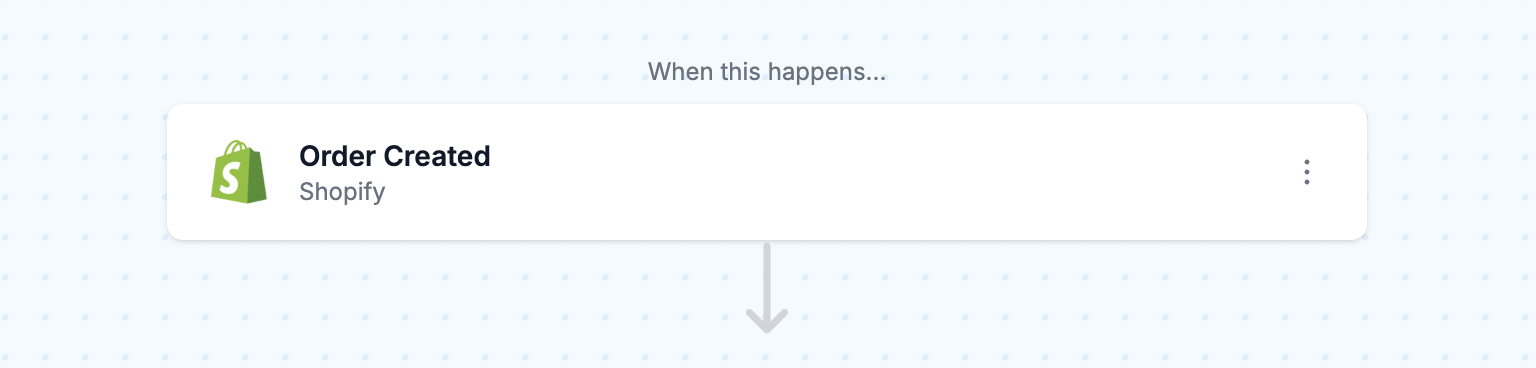
- Order created
First, start with this Shopify order created trigger that runs whenever a new order is placed on your store.
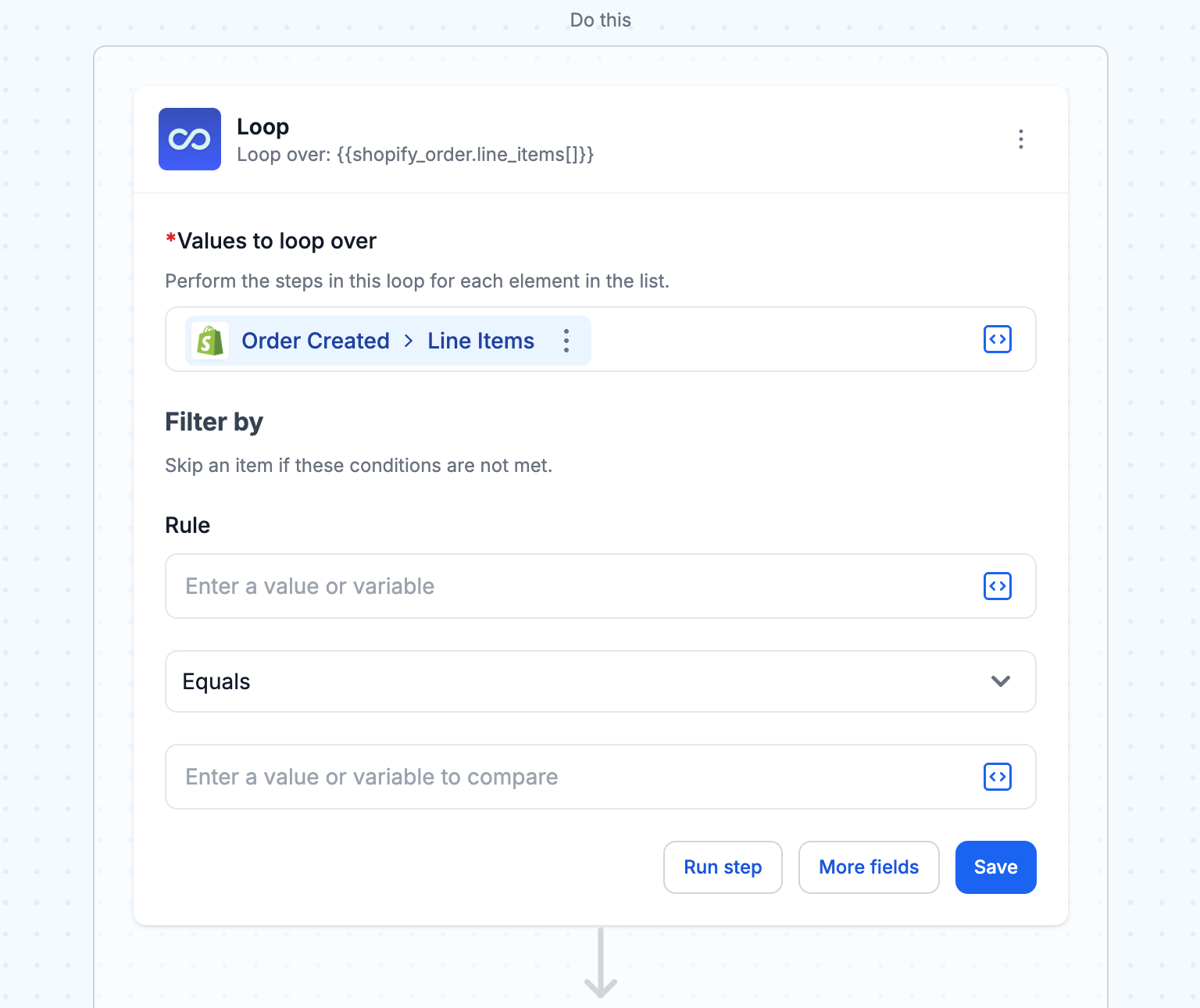
- Loop through the order’s line items
Next, add a Loop step to iterate through each line item in the created order. This ensures every purchased product is checked individually for stock status.
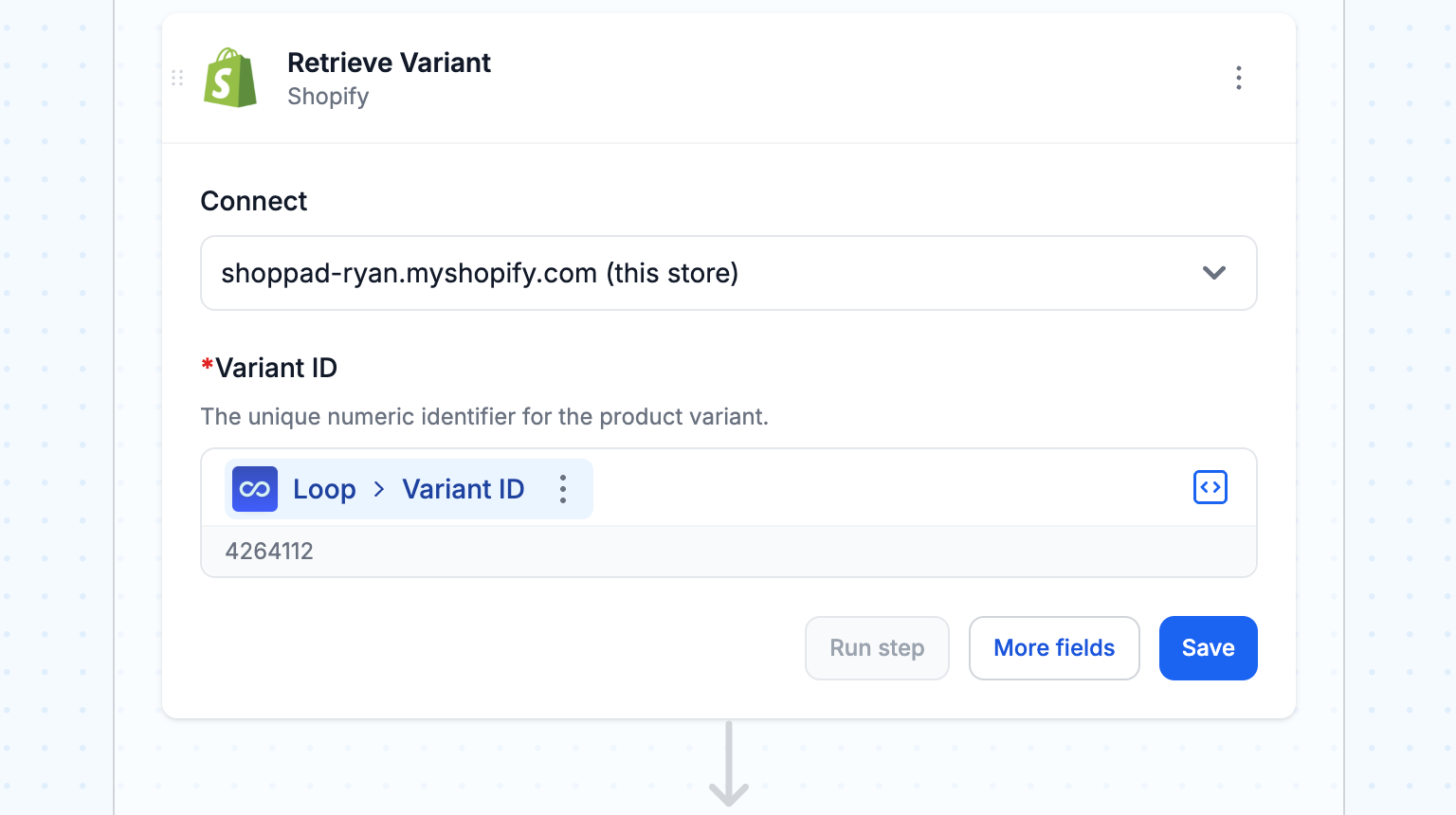
- Get the variant details
Use a Shopify Variant Retrieve step to fetch the current inventory data for each product variant being processed. This step pulls real-time inventory quantities for accurate stock monitoring.
- Filter low stock
Add a Filter step that checks if the inventory quantity is less than or equal to 0. This condition identifies products that have just gone out of stock after the order.
- Set the rule to use the variant's inventory quantity
- Set the comparison field to "Is less than or equal to"
- Set rule threshold to "0"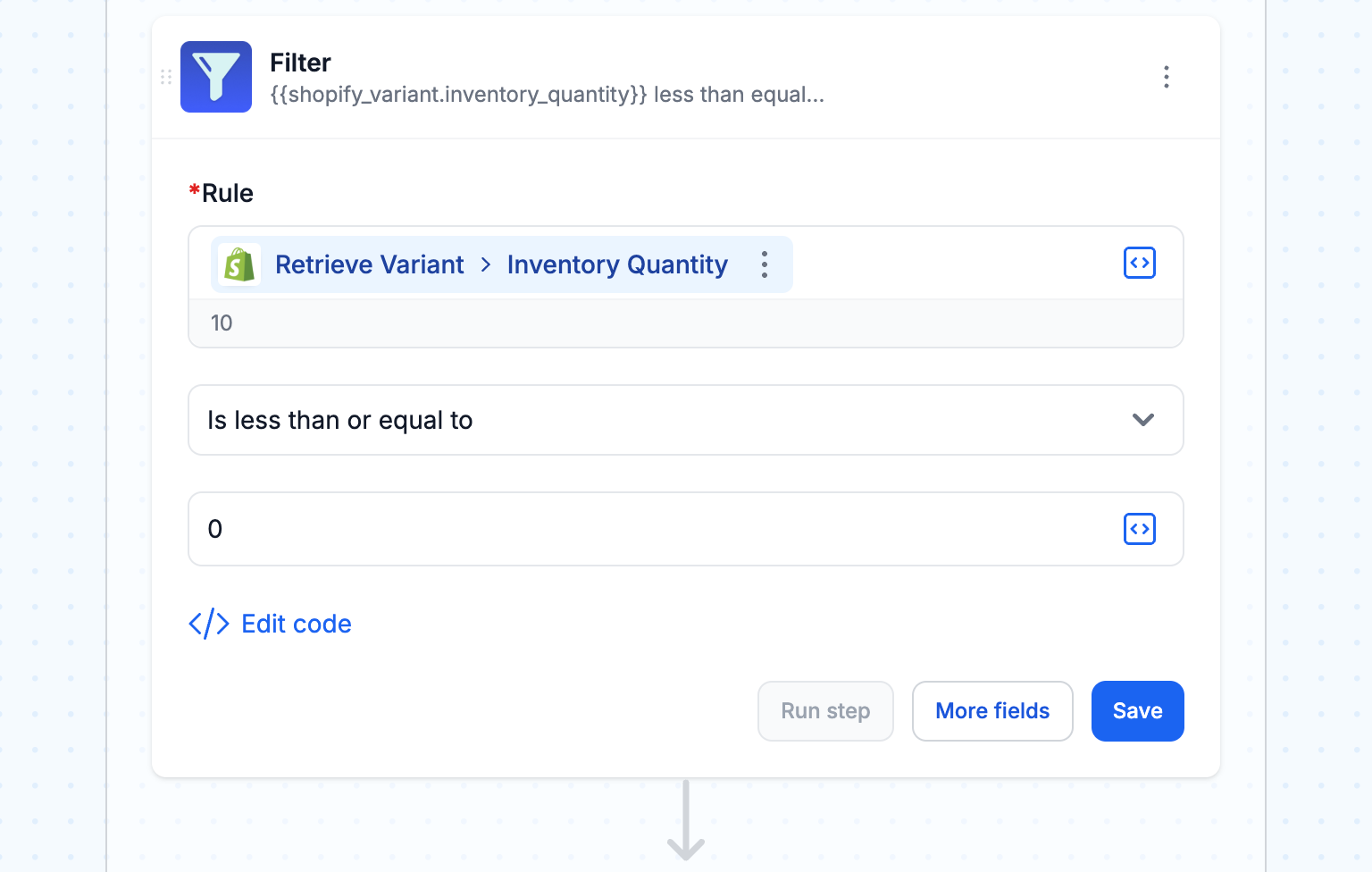
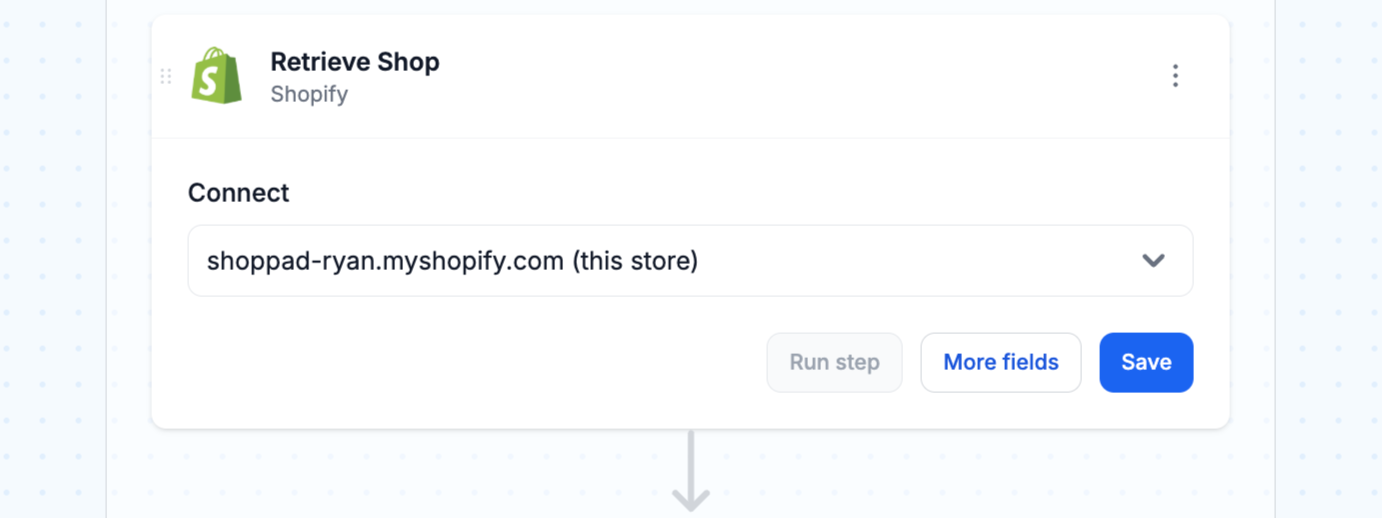
- Get your Shopify store details
Next, add the Retrieve Shop step in order to get your store details to use in the Email message.
- Send email notification
Lastly, add an Email step to send notifications when products go out of stock.
Click the [<>] button for each field to open the Variable Selector side sheet. From there, you can add the right data variables to customize the message.
- Recipient: Set to your email address
- Subject: "Item out of stock: [SKU]"
- Message: Automated notification with the SKU and a direct link to view the product in your Shopify admin
- Variables: Uses the variant's SKU and product ID for detailed reference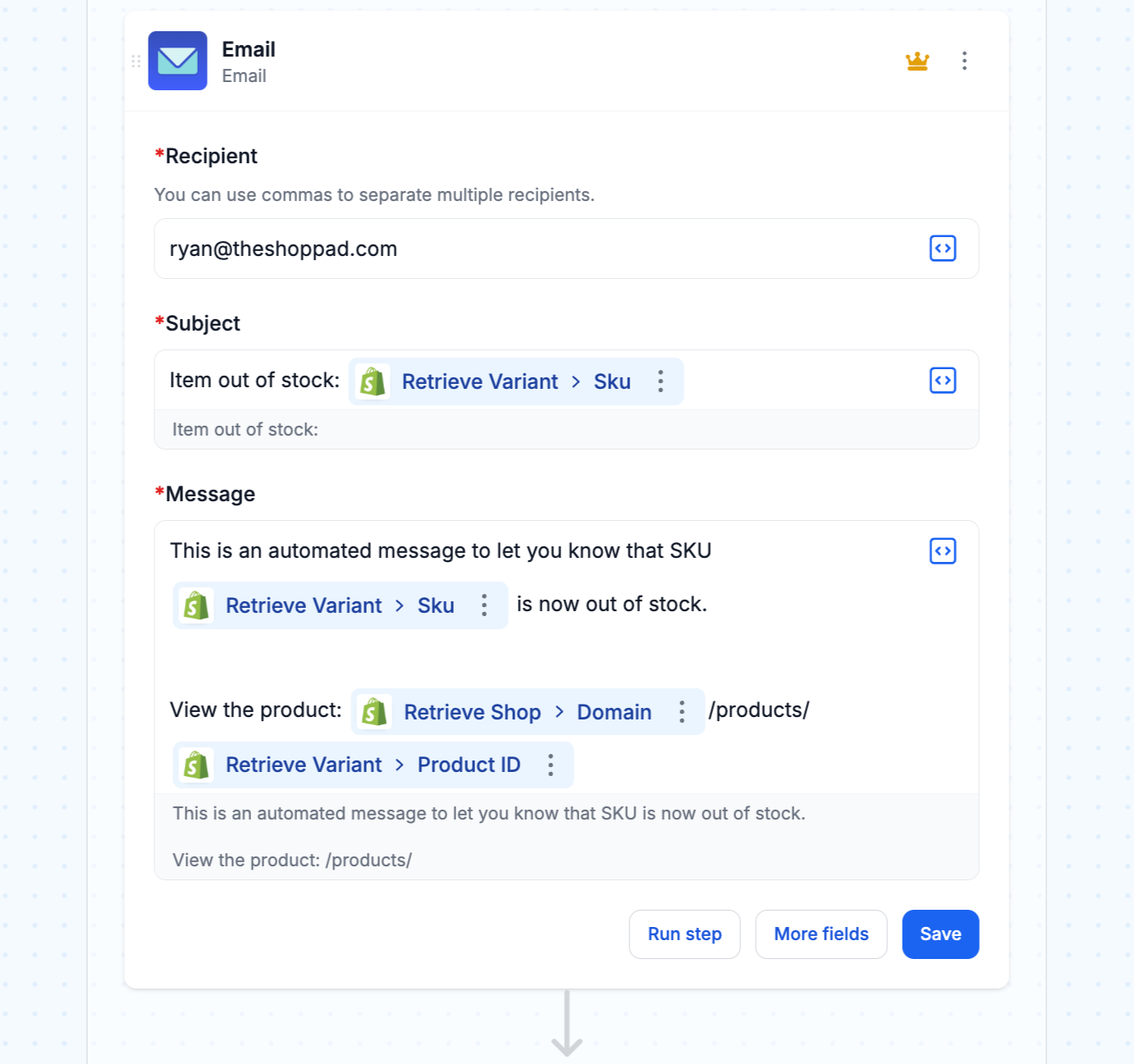
- Turn “On” this workflow
Turn the workflow ON and run this once as a test by creating a sample order with only 1 piece in inventory to ensure all steps are functioning correctly before letting it run automatically.
Save yourself the setup. Use this template instead:
Related templates:
What is an out-of-stock email notification system?
An out-of-stock email notification system tracks your Shopify inventory and sends you alerts when something runs low or sells out. Instead of repeatedly checking stock levels, you get an email when you need to pay attention.
It works like a digital assistant that never gets tired. Whether you sell sneakers or skincare, this system helps you avoid missed sales and keeps your customers happy.
Why set up out-of-stock email alerts?
Let’s say you run a Shopify store selling gourmet popcorn. Your caramel sea salt flavor is always in demand. One busy weekend, you’re packing orders and don’t see that it’s sold out. By Monday, you’ve got a few emails from disappointed fans, and five shoppers have already bounced after seeing “out of stock.”
With stock alerts, you can jump on these situations before they hurt your business. You stay ahead by getting notified when inventory drops below a number you pick—say, ten bags for your most popular flavors, or instantly when a seasonal special runs out.
These alerts do more than just warn you—they give you data. If a product sells out every week, you know it’s time to order more or talk to your supplier about increasing your next shipment. Some shops even use these alerts to trigger customer back-in-stock emails, turning a missed sale into a future order.
Tips on managing stock notifications effectively
1. Create different alert thresholds for different products
Not all products need the same treatment. Your bestsellers might need alerts when they drop below 20 units, while slow movers only need attention at zero. Consider setting up multiple workflows with different inventory thresholds. You can even create separate email notifications for out-of-stock products for high-priority items versus regular stock.
Try this template:
If you stock products in more than one warehouse or store, thresholds can be set per location as well. See location-based low stock alerts on Shopify.
2. Use email filters to organize your alerts
Once you've got alerts flowing, your inbox might get busy. Set up email filters to automatically sort notifications into folders based on product type, urgency, or supplier. This way, you can tackle restocking systematically instead of drowning in a sea of alerts.
3. Connect alerts to your team's workflow
Consider who really needs these notifications. Maybe your purchasing manager needs all alerts, but your marketing team only needs to know about bestsellers going out of stock. You can set up out-of-stock collection alerts for specific product groups and route them to the right people.
Try this template:
4. Add context to your notifications
Don't just send "Product X is out of stock." Include helpful details like the last restock date, average daily sales, or supplier contact info. The more actionable your alert, the faster you can fix the problem. MESA lets you pull in all sorts of data to make your notifications super useful.
Reasons to automate out-of-stock notifications
Beyond the obvious benefits, there are some surprising reasons why store owners love automated stock alerts. For one, they're great for catching inventory discrepancies. If you're getting out-of-stock alerts but your supplier says they shipped inventory last week, that's a red flag worth investigating.
These alerts also help with seasonal planning. Notice certain colors or sizes selling out faster during specific months? That's gold for next year's ordering strategy. Some merchants even use stock-out patterns to identify which products to bundle together - if two items consistently sell out around the same time, they might be perfect bundle partners.
Another unexpected benefit? Staff accountability. When everyone on your team gets the same stock alerts, there's no finger-pointing about who forgot to reorder. The system creates a clear paper trail and keeps everyone on the same page about what needs attention.
An alert tells your team a product sold out. To keep shoppers from landing on that product until it's restocked, see how to hide out-of-stock products in Shopify.
Frequently Asked Questions
Can I get alerts before products completely sell out?
Absolutely! Just adjust the filter step to check for higher quantities. Want alerts when inventory drops below 5? Change the filter to check if quantity is less than or equal to 5. You can receive email alerts at whatever threshold makes sense for your business.
What if I have hundreds of products?
The workflow handles this automatically by checking each product in every order. Whether you have 10 products or 10,000, it'll monitor them all without any extra setup. You might want to customize which products trigger alerts though - maybe you only care about your top 50 SKUs.
Can I send these alerts to multiple people?
Yes! In the email step, you can add multiple recipients separated by commas. You could also create separate email steps to send customized messages to different team members. Your warehouse manager might need different info than your marketing team.
Will this slow down my checkout process?
Nope! The workflow runs in the background after an order is placed. Your customers won't experience any delays, and the inventory check happens behind the scenes. It's like having an invisible assistant working while you sleep.
Can I customize this for specific collections or product types?
Definitely. You can add additional filters to only check certain product types, vendors, or collections. This is super helpful if you want different alert rules for different parts of your catalog. Maybe your limited edition items need immediate alerts, while everyday products can wait.
At MESA, we've seen merchants use these workflows in creative ways - from triggering automatic reorder emails to suppliers to creating daily inventory reports. The key is starting simple and then expanding based on what your business needs. Once you've got the basic alert system running, you'll wonder how you ever managed inventory without it.
